
Umid Suleymanov
PhD Student in Computer Science, Virginia Tech
I am a third-year PhD student in Computer Science at Virginia Tech. My research focuses on Trustworthy Machine Learning, specifically investigating LLM Security (jailbreak attacks/defenses), Privacy (membership inference, unlearning), and Few-Shot Learning for Network Intrusion Detection.
Most recently, I was a Data Science Intern at Amazon (Foundational Security), and previously on the AWS Proactive Security team. I was also a two-time finalist at the International Data Analysis Olympiads, obtaining 16th place among 2187 teams.
News
-
Sep 2026
[Papers] Two papers accepted to NeurIPS 2026: "Evaluating an Evaluation: Membership Inference Attacks as Machine Unlearning Diagnostics" and "GitInject: Real-World Prompt Injection Attacks in AI-Powered CI/CD Pipelines".
-
Aug 2026
[Paper] Work from my Amazon internship was accepted as a spotlight presentation at an internal Amazon machine learning conference.
-
Sep 2026
[Service] Invited to serve as a reviewer for ICLR and ACM Transactions on AI Security and Privacy.
-
Sep 2026
Our paper "Auditing Fairness–Privacy Trade-offs" was selected for the 2026 Commonwealth Cyber Initiative (CCI) Research Paper Showcase.
-
Aug 2026
[Paper] Our paper "CourtGuard-PMPD: Zero-Shot Policy Adaptation in LLM Safety without Fine-Tuning" was accepted to Findings of EMNLP 2026.
-
Aug 2026
Completed my Data Science internship at Amazon (Foundational Security) and resumed research as a Graduate Research Assistant at Virginia Tech.
-
Jul 2026
[Service] Selected as a Gold Reviewer for ICML 2026; also serving as a reviewer for NeurIPS 2026.
-
May 2026
Joined Amazon (Foundational Security) as a Data Science Intern.
-
Mar 2026
[Paper] Our paper "Auditing Fairness–Privacy Trade-offs: Subpopulation-Level Effects of Fairness-Enhancing Algorithms" was accepted at IEEE EuroS&P 2026.
-
Nov 2025
[Paper] Our paper "SIGMA: Search-Augmented On-Demand Knowledge Integration for Agentic Mathematical Reasoning" was accepted at AAAI 2026.
-
Aug 2025
[Paper] Our paper "SSPNet: Semi-Supervised Prototypical Networks for Few-Shot Network Intrusion Detection" was accepted at IEEE MILCOM 2025.
-
May 2025
Joined Amazon (AWS Proactive Security) as a Data Science Intern.
-
Apr 2025
Presented at annual CCI Student Researcher Showcase
-
Dec 2024
Presented at Commonwealth Cyber Initiative (CCI) Southwest Virginia Graduate Student Summit (SWVA)
-
Sep 2024
[Paper] Published research on "Deep Unlearning of Breast Cancer Histopathological Images" and "Contextualized Word Embeddings for Azerbaijani" at IEEE AICT 2024.
-
Aug 2024
Started my PhD in Computer Science at Virginia Tech.
-
Jun 2022
Promoted to Leading Data Scientist at E-Gov Development Center.
-
Nov 2019
Joined E-Gov Development Center as a Senior Data Scientist.
-
Oct 2018
Won 1st Place at the AzInTelecom Hackathon with a solution involving image processing and OCR.
-
Jul 2018
Started as a Data Engineer at E-Gov Development Center.
Selected Publications
Experience
Amazon (Foundational Security)
May 2026 – Aug 2026- Performed large-scale security data analysis using SparkSQL to surface actionable signals across enterprise-scale datasets.
- Developed agentic LLM architectures to autonomously extract strong, explainable signals from unstructured security text.
- Conducted applied research on LLM safety and security analytics, accepted as a spotlight presentation at an internal Amazon machine learning conference.
Virginia Tech
Aug 2024 – May 2026, Aug 2026 – Present- Published two NeurIPS 2026 papers on trustworthy AI security: MIAU, a diagnostic auditing membership-inference attacks as machine-unlearning evaluations, and GitInject, a study of real-world prompt-injection attacks in AI-powered CI/CD pipelines.
- Published research on few-shot learning for Network Intrusion Detection, outperforming current models by 3.5%.
- Developed policy-grounded RAG-based agentic defenses for detecting and mitigating LLM jailbreak attacks, surpassing state-of-the-art detection methods by 4% (CourtGuard-PMPD, accepted to Findings of EMNLP 2026).
- Audited fairness–privacy trade-offs of fairness-enhancing algorithms at the subpopulation level, revealing disparate membership-inference risks (accepted at IEEE EuroS&P 2026).
- Conducting research on LLM privacy leakage, including membership inference and memorization analysis; designed agent-based reflective defenses that reduced privacy leakage by 35%.
Amazon (AWS Proactive Security)
May 2025 – Aug 2025- Developed statistical and ML models and performed analysis to process large-scale security data.
- Built ETL pipelines, dashboards, and metrics to deliver actionable insights using Python, SQL, and AWS tools.
ADA University
Jan 2023 – Aug 2024- Instructed courses on Intro to Big Data Engineering, Deep Learning, and Data & Information Engineering; designed comprehensive syllabi, instructional materials, and assessments using Blackboard LMS.
- Conducted research at the Center for Data Analytics and Research, focusing on pre-training and efficient fine-tuning of Large Language Models (LLMs) for low-resource languages and Explainable AI (XAI).
E-Gov Development Center
Jun 2022 – Jan 2023- Led the design and deployment of end-to-end ML pipelines, integrating predictive models into production systems.
- Developed pretrained language models and word embeddings for the Azerbaijani language, achieving a 4.3% performance improvement on downstream NLP tasks.
- Built custom Elasticsearch text analyzers to enhance search relevance, which increased click-through rates by 6%.
E-Gov Development Center
Nov 2019 – Jun 2022- Built an automated document anonymization pipeline using custom Named Entity Recognition (NER), accelerating manual processing speed by 32%.
- Designed predictive models to forecast customer wait times and optimize queue management, reducing related complaints by 16%.
E-Gov Development Center
Jul 2018 – Nov 2019- Optimized data reliability and quality for large-scale queue and NLP datasets; implemented robust data acquisition, preprocessing, transformation, and storage routines.
- Gathered complex business requirements and successfully translated them into actionable data science strategies.
Center for Data Analytics Research
Dec 2017 – May 2018- Developed automated text classification systems for news article analysis, utilizing Machine Learning and Deep Learning algorithms; Published research findings on automated news classification in the IEEE AICT Conference.
Teaching
I have served as an instructor for the following courses:
- Artificial Intelligence University Instructor
- Deep Learning University Instructor
- Intro to Big Data and Analytics University Instructor
- Data and Information Engineering University Instructor
- Instructor @ 30 Days of ML Organized by Google Developer Groups Baku
Invited Talks & Academic Service
- NeurIPS 2026; ICLR; ICML 2026 (Gold Reviewer); ACM Transactions on AI Security and Privacy; ACM Transactions on Privacy and Security; AICT 2025; AICT 2024 Reviewer
- Data, ERP and AI Summit Speaker: "Large Language Models: Reasoning and Security" (Oct 2025)
- Elevate & Innovate, Azercell Speaker: "Artificial Intelligence and its Implications for Accessibility" (May 2023)
- Azerbaijan Engineers Union Speaker: "Machine Learning and its Applications" (Mar 2023)
- Intel International Science and Engineering Fair (Local Selection) Judge (CS Domain) (Feb 2023)
- Bilim Baku Science Fair Judge (Sep 2022)
- Google Developers Group Baku (Kaggle 30 Days of ML) Tutorial: "Intermediate Machine Learning" (Aug 2021)
- Intl. Conf. on AI for Digital Governance (AI4DIGIGOV) Tutorial: "Applications of ML in Public Services" (Apr 2021)
Honors & Achievements
- Gold Reviewer, ICML 2026
- Selected for the CCI 2026 Research Paper Showcase
- Finalist at International Data Analysis Olympiad
- TensorFlow Developer Certificate
- First Place, AzInTelecom Hackathon
- Instructor at 30 Days of ML | Kaggle, Google (2021)
- 8+ peer-reviewed papers in AI/ML
- Honorable Mention, ACM ICPC Contest
Projects
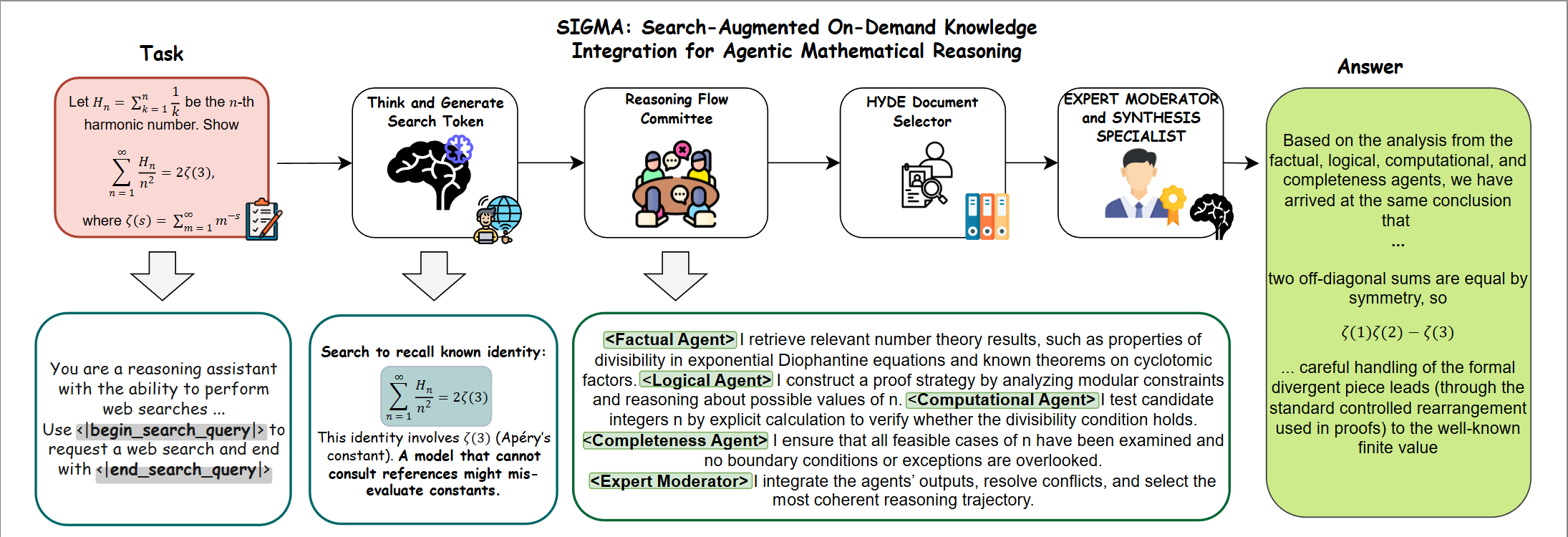
SIGMA: Agentic Math Reasoning
Designed a multi-agent framework that orchestrates specialized agents to perform targeted searches and synthesize findings. Outperforms open and closed-source models on MATH500 and GPQA benchmarks by 7.4%.
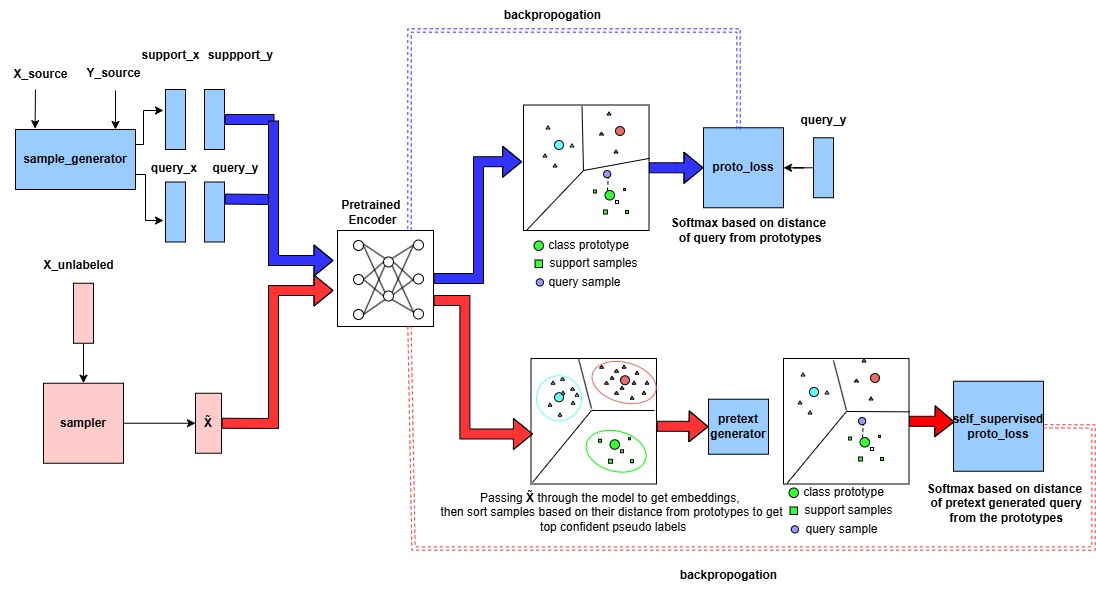
SSPNet: Few-Shot NIDS
Proposed a semi-supervised prototypical network for Network Intrusion Detection (NIDS). The model leverages pseudo-labels from high-confidence samples to improve detection of novel attacks with limited labeled data.
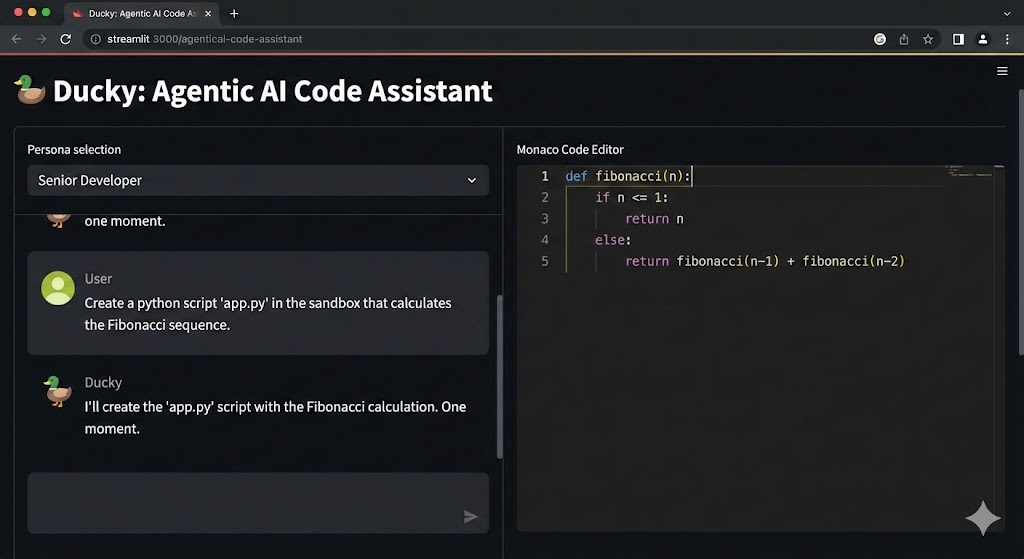
Ducky: Agentic AI Code Assistant
Ducky is an interactive, autonomous agent interface that bridges the gap between conversational LLMs and an IDE. It can autonomously read, write, navigate, and modify files within a secure sandbox environment.
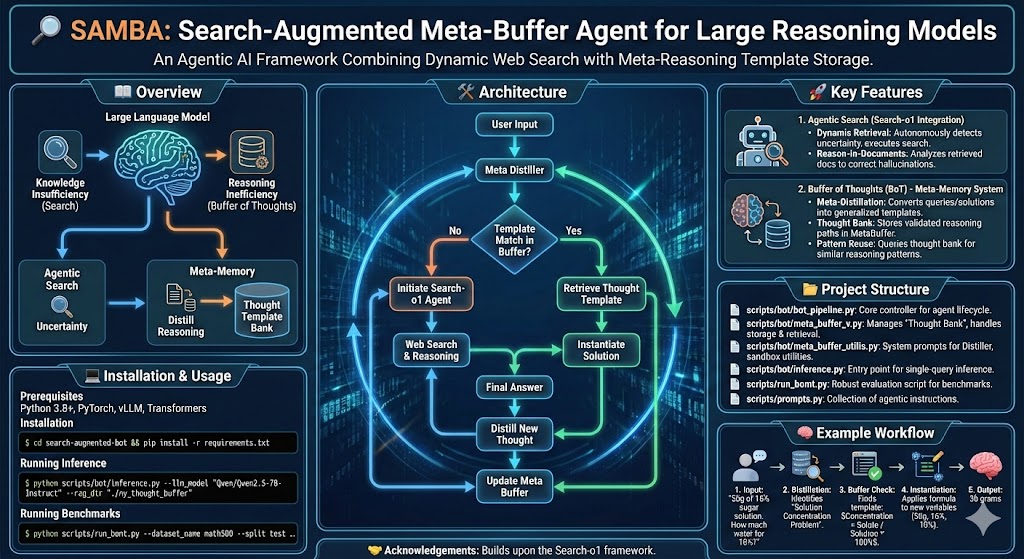
Search-Augmented Buffer of Thoughts
Search-Augmented Buffer of Thoughts (SA-BoT) is an agentic AI framework that merges dynamic web search with a "Buffer of Thoughts." It autonomously retrieves external info to solve problems, distills successful reasoning into reusable templates stored in a meta-memory.
CourtGuard-PMPD: Policy-Grounded RAG Defense
Developed policy-grounded RAG-based agentic defenses for detecting and mitigating LLM jailbreak attacks. The system retrieves safety policies dynamically to ground model responses against adversarial inputs.
Agentic Defenses for LLM Privacy
Developing an agentic feedback loop to identify private information leakage in Large Language Model outputs and creating privacy-preserving defenses to mitigate these risks.
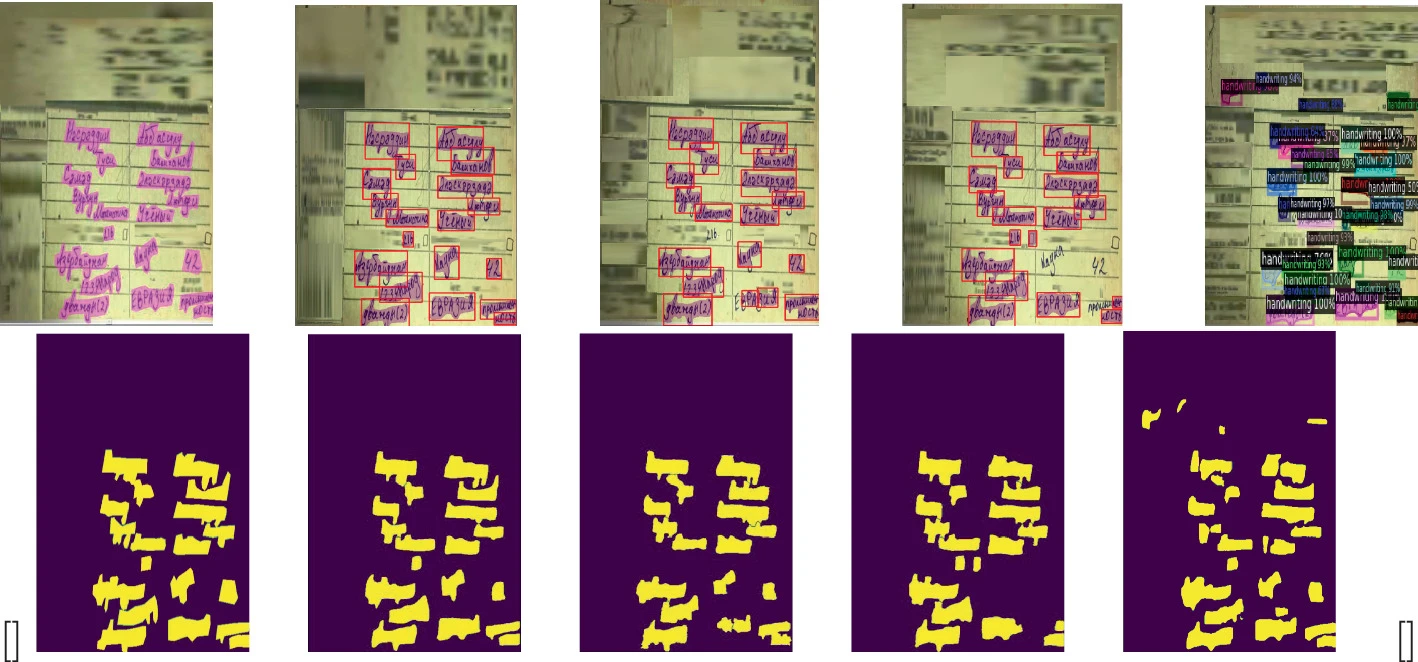
Historical Document Segmentation
Developed instance segmentation pipelines (U-Net and Mask R-CNN) to digitize handwritten historical archives. U-Net with Watershed transformation outperformed two-stage architectures.
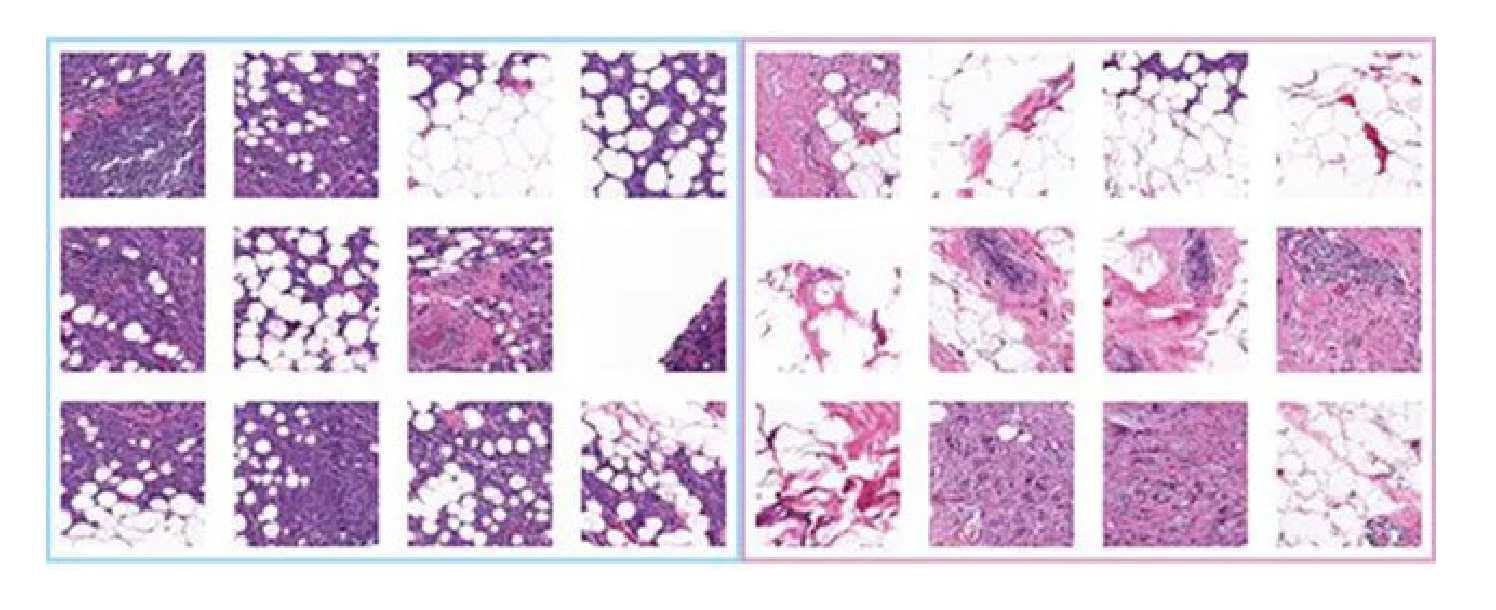
Deep Unlearning for Histopathology
Applied influence-based unlearning techniques to DenseNet models for breast cancer classification (BreaKHis dataset), enabling data removal compliance while maintaining model utility.
Auditing Fairness-Privacy Trade-offs
Developed a unified empirical framework to audit how fairness-enhancing algorithms influence membership inference privacy risks at the subpopulation level, revealing disparate trade-offs between privacy, utility, and fairness.
MIAU: Evaluating an Evaluation
A diagnostic framework (Membership Inference Attack Unlearning score) that provides a more principled way to interpret MIA-based machine-unlearning evaluations.
GitInject: Prompt Injection in CI/CD
Studies real-world prompt injection attacks against AI-powered CI/CD pipelines, showing how untrusted repository content can influence AI systems operating within software-development workflows.
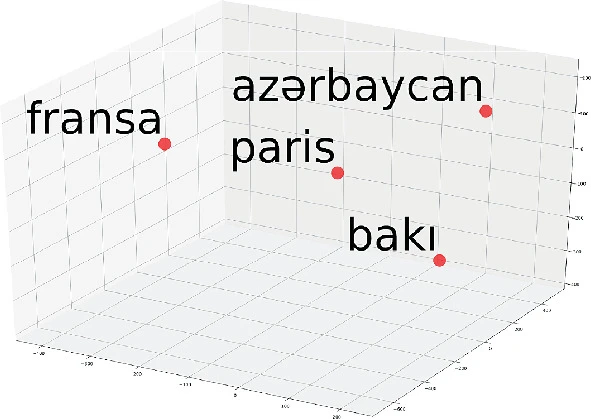
Contextualized Embeddings (Az)
Trained RoBERTa and GPT-2 models on a 164M token Azerbaijani corpus. This work provided the first high-quality contextual embeddings for the language, significantly improving downstream NLP tasks.
Online News Classification (AZ)
Developed an automated classification system for Azerbaijani news articles using Naive Bayes, SVM, and Neural Networks. Implemented stemming, stop-word removal, and feature reduction to enhance accuracy and performance.
Sentiment Polarity Detection (AZ News)
Built sentiment analysis models for Azerbaijani social news articles using SVM, Random Forest, and Naive Bayes with TF-IDF and frequency-based BOW. Evaluated on a dataset of 30k manually labeled articles; SVM achieved top performance.
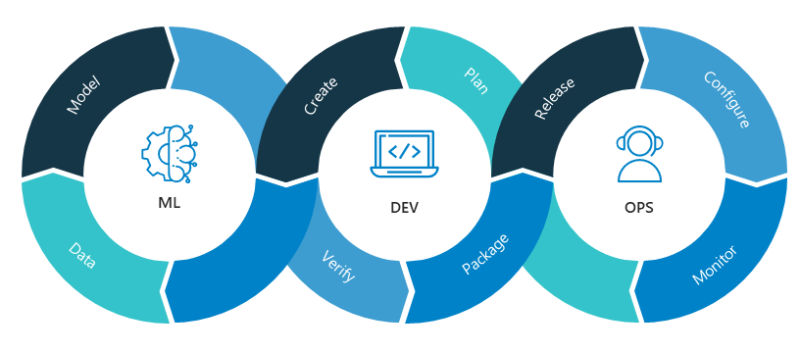
End-to-End MLOps Pipeline
Implemented a full ML lifecycle project using MLflow for experiment tracking and model registry, and Docker for containerization, following industry standard data science processes.
Song Recommendation System
Built a scalable recommendation engine using Apache Spark and MLlib. The system utilizes implicit feedback from user history logs to predict and recommend new songs.
Wikipedia Parser & Analyzer
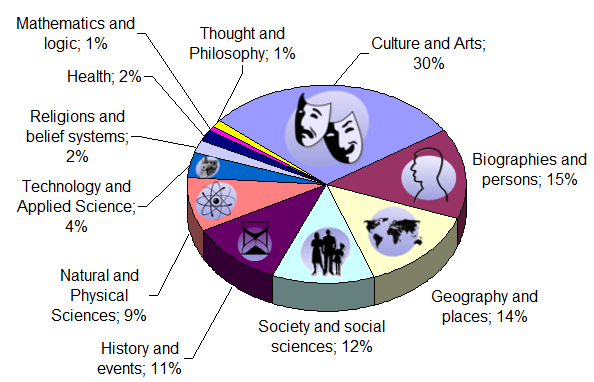
Developed a heuristic-based parser to clean and analyze Azerbaijani Wikipedia data. Analyzed property distributions in templates and external reference usage.